
Not Every Decision Needs the Same Amount of Process
This is the second in a three-part series about focusing your energy where failure would hurt the most. The first post explored how to choose what deserves attention now. This post looks at how to scale the process around a decision to the consequences of getting it wrong.
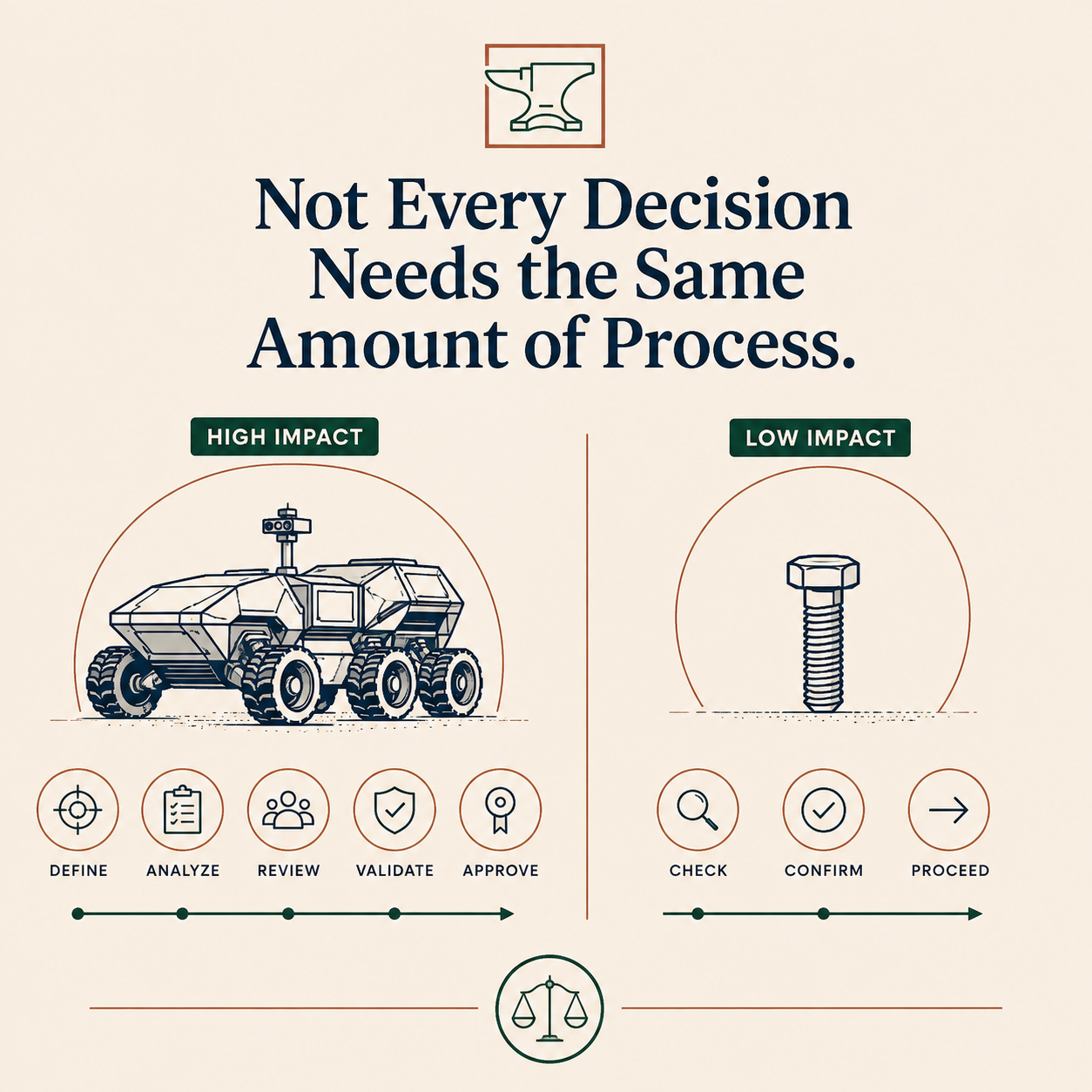
Imagine that one team is developing a complex new autonomous vehicle while another wants to replace a bolt in a nonessential assembly.
Both teams should understand what they are changing. Both should consider whether the change is appropriate, involve the right people, and leave behind enough information for someone to understand what was decided.
But they should not need the same process.
The first project may involve new technology, multiple interacting systems, demanding operating conditions, significant customer expectations, and decisions that will be expensive to reverse later. It may require careful requirements definition, formal reviews at several stages, specialized technical input, testing, verification, and clear approval authority.
The bolt change may need a short technical conversation, a check of the relevant requirements, and a lightweight record.
A healthy system does not apply the same amount of process to every decision. It applies the right amount of process to the work in front of it.
The Goal Is Not Maximum Process
Most burdensome processes began with a reasonable intention.
Something went wrong, so another approval was added. A supplier failed, so every supplier received a longer questionnaire. A project missed an important requirement, so the organization introduced a larger checklist. A decision was poorly documented, so every future decision required a new form. Each control may have made sense in the situation that created it. The problem begins when controls designed for serious risks spread into routine work.
Eventually, every purchase receives the same scrutiny, every change follows the same approval path, and every review uses the same checklist regardless of what is being decided. People spend time completing forms that do not meaningfully change the outcome, while reviewers learn to move quickly through questions that rarely apply.
On paper, the organization may look highly controlled. In practice, the most consequential work becomes harder to distinguish from everything around it.
When everything receives the highest level of rigor, the highest-risk work no longer stands out.
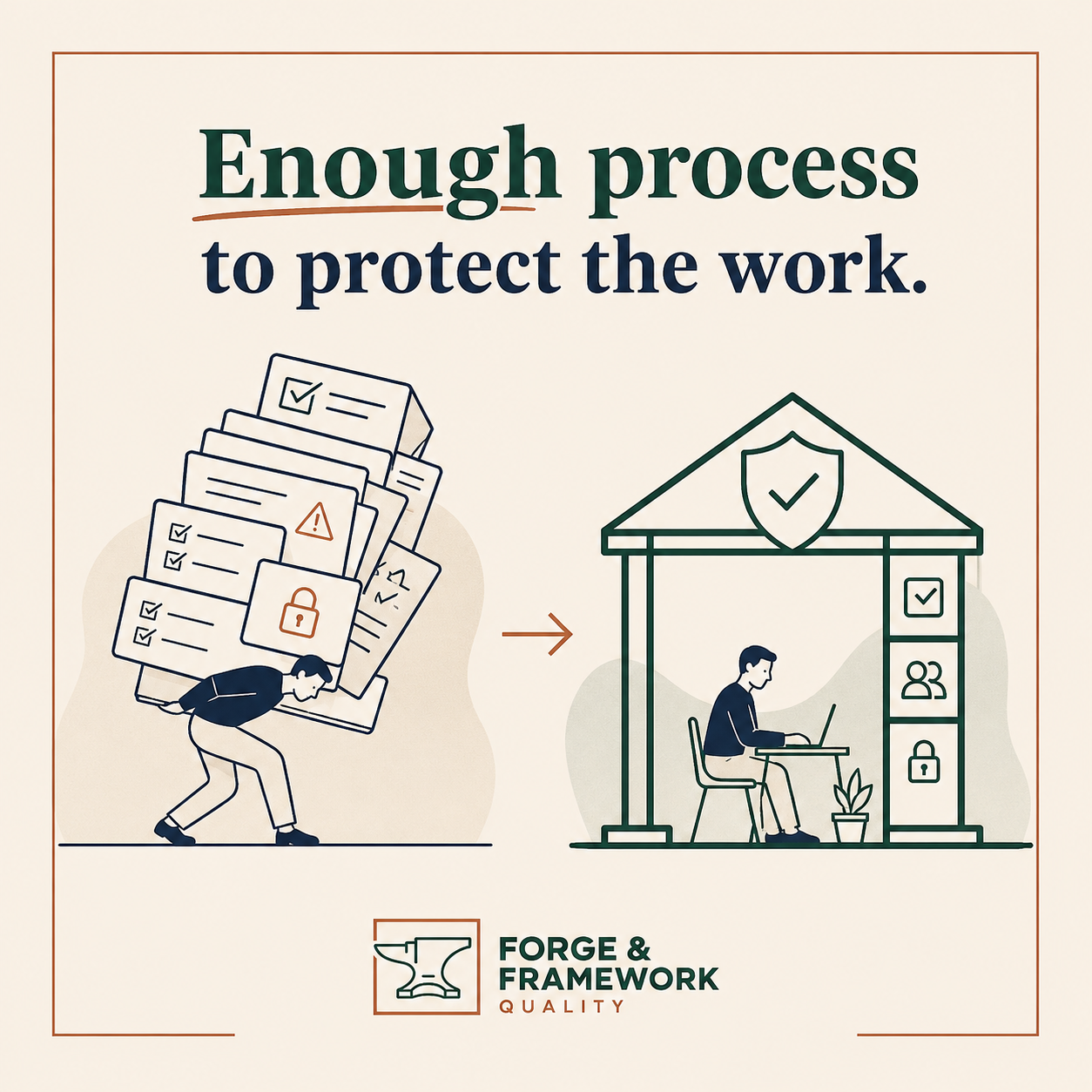
The goal is not maximum process. It is enough process to reliably protect the work.
Let Consequence Determine Rigor
A risk-based approach is ultimately a way of deciding how much attention something deserves.
What could go wrong? Who or what would be affected? How difficult would the failure be to detect or correct? Could the decision affect safety, performance, customer trust, cost, schedule, regulatory obligations, or the organization’s ability to deliver?
The more consequential and difficult to reverse the decision, the more deliberate the process should become.
That may mean defining requirements more carefully, bringing additional perspectives into the review, testing assumptions, documenting the reasoning behind a decision, or slowing down before the organization becomes committed to a path.
This is not bureaucracy when the consequences justify it. It is the system creating room for the thinking the work requires.
The opposite is also true. When the consequences are limited, the process should be allowed to remain simple. A low-risk decision may need only a brief conversation and a short record, provided the organization has still considered why that level of rigor is appropriate.
The distinction is not between process and no process. It is between process that fits the work and process that has become disconnected from it.
Match the Review to the Risk
Complex work rarely fails because no one cared. More often, the team moved forward before the right questions were answered.
Requirements were incomplete. Interfaces were not fully understood. A critical assumption went untested. The people closest to manufacturing, field use, or customer needs entered the conversation too late. A decision that seemed minor early in the project became expensive to change after purchasing, production, or testing began.
For consequential work, a serious review creates a deliberate pause before the organization becomes more committed to a path.
Are the requirements clear? Do we understand how the design will be used? Have we considered the most important ways it could fail? Are the right people involved? What evidence will show that it works? What still needs to be resolved before the next major commitment?
Those questions deserve time when the work is complex and the consequences are significant.
A serious design review is not ceremony when the design is serious. It protects the organization from becoming efficient at moving in the wrong direction.
But not every decision requires a formal meeting or a twenty-page checklist. For lower-risk work, a short conversation and a lightweight record may be enough. The people who understand the change can confirm the need, consider the likely effects, agree on the path forward, and capture enough information that the decision does not have to be reconstructed later.
A simple process does not mean that no thought occurred. It means the thought was proportionate.
Good process reserves the organization’s deepest attention for the work that needs it while allowing routine decisions to move without unnecessary friction.
Supplier Oversight Should Follow Risk
The same principle applies to supplier management.
A supplier producing a critical custom component may need technical reviews, qualification activities, performance monitoring, inspection requirements, corrective-action expectations, and regular evaluation. If that supplier fails, the product, project, customer, or mission may be directly affected.
A commercial supplier providing an ordinary, low-risk product may need only basic purchasing controls and a reliable way to flag significant quality or delivery problems.
That is still supplier oversight. It is simply oversight scaled to the risk.
Organizations sometimes build purchasing systems around their most critical supplier relationships and apply the same expectations almost everywhere. Routine purchases become slow and difficult. Suppliers complete extensive questionnaires that no one has the time or expertise to evaluate meaningfully. Employees begin looking for workarounds because the approved path makes simple work unnecessarily painful.
The organization believes it has created control. What it has often created is drag.
The better approach is not maximum oversight or no oversight. It is understanding which supplier relationships can materially affect the work and giving those relationships the attention they deserve.
Oversight should strengthen the business, not handicap it where the risks are low.
Risk-Based Means Deliberate
A risk-based approach should not become an excuse for skipping thought.
Declaring a decision “low risk,” capturing nothing, and later discovering an overlooked consequence is not risk-based thinking. It is unexamined thinking.
Even a simple decision deserves enough consideration to understand what is changing, why it is changing, who understands the likely effects, and why a lightweight review is sufficient. Those answers may fit in a short meeting note, a change request, or a few clear sentences.
The point is not to make the record impressive. It is to show that the decision was deliberate.
The better question is not, “How can every situation follow the same path?”
It is, “What level of structure does this decision need?”
Sometimes the answer will be a formal review, extensive testing, or close supplier oversight. Sometimes it will be a short conversation and a basic record.
The system should be strong enough to protect what matters and simple enough to let everything else move.
That is not less discipline. It is more thoughtful discipline.
The goal is not more process everywhere. It is the right process where it matters most.
When process is scaled well, people can move quickly where the risks are low and carefully where the consequences are high. The system protects consequential work without making routine work unnecessarily difficult.
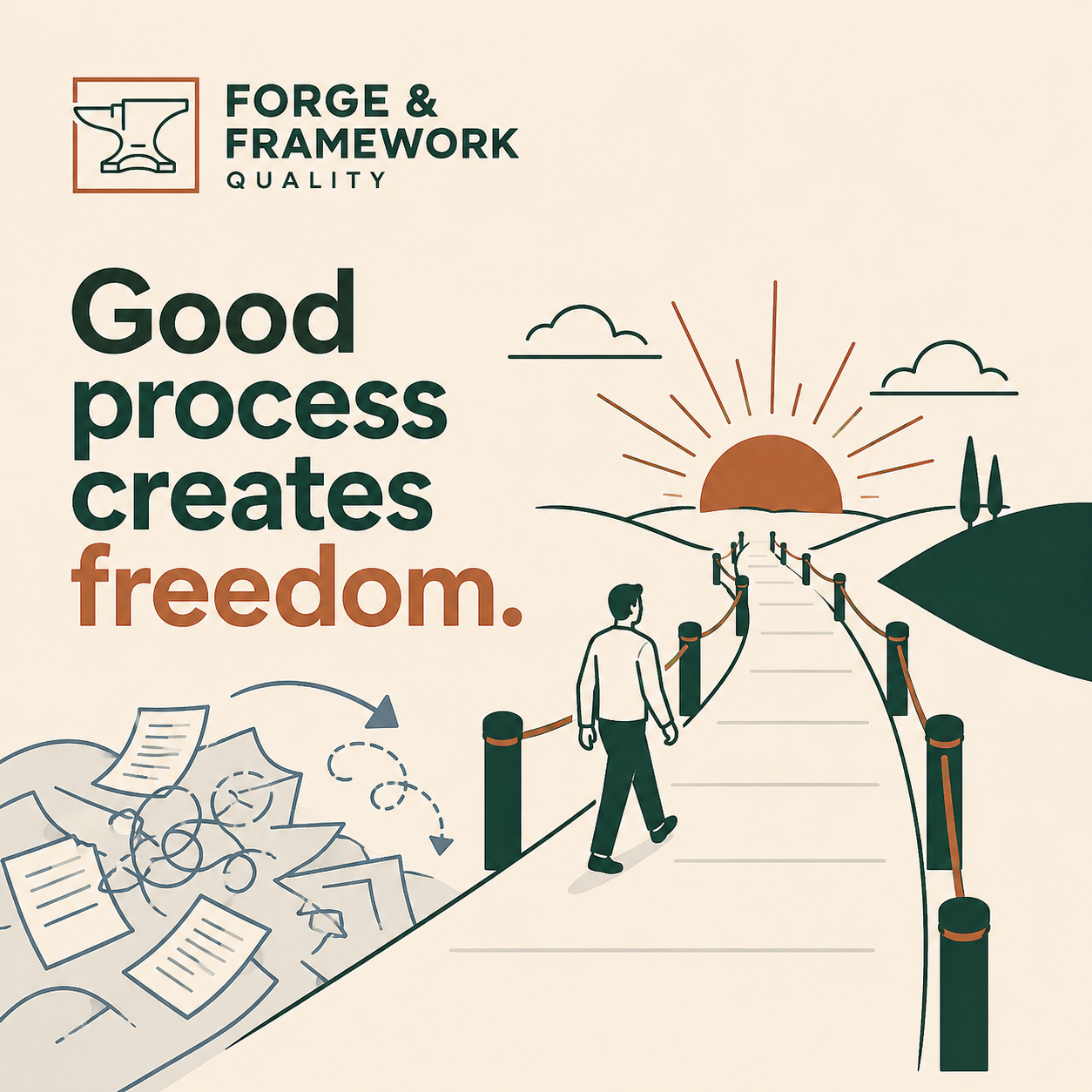
That is how process creates freedom.
If you are trying to build a Quality Management System that creates confidence without creating unnecessary weight, my free five-day course, QMS Strategy in a Week, is designed to help you clarify what your organization actually needs from its system.